
"16th Century"
500 article(s) found

The flavor and taste of Ugandan coffee with extremely light aroma introduction to the characteristics of boutique coffee in manor area
There was an emirate called Kitala in present-day western Uganda before the 13th century AD. In the 13th and 14th century, the nomadic Bachwezi conquered the country. From the end of the 15th century to the beginning of the 16th century, the Luo people who originally lived in southern Sudan went south to replace the rule of the Bachwezi, established the kingdom of Buniolo and established the Babito dynasty in Buganda. These foreign rulers were soon engaged in agriculture locally.
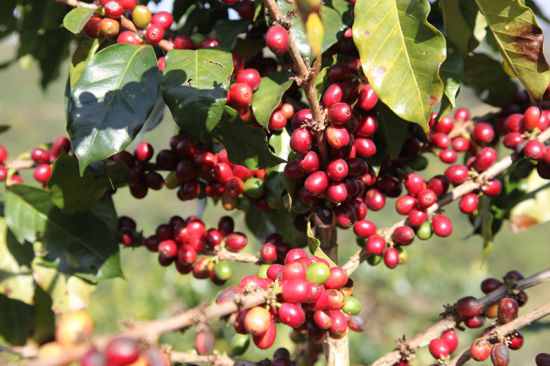
How to grow Arabica coffee beans, one of the most important coffee trees in the world?
Arabica species (scientific name CoffeeArabica). The origin of Arabica species is Ethiopia's Abyssinia Plateau (present-day Ethiopian Plateau). In the early days, it was mainly used as medicine, and in the 13th century it developed the habit of baking and drinking. It was introduced into Europe through the Arab world in the 16th century and further became a favorite drink all over the world.

16 little things about coffee
Professional coffee knowledge exchange more coffee bean information please follow the coffee workshop (Wechat official account cafe_style) 16 little things about coffee can you remember the last day when you didn't drink coffee? I'm afraid it's difficult, because coffee has become a part of our life, but there are still a lot of knowledge about coffee, some of which are quite interesting. 16 items of coffee 1. In Turkey

The god of poetry, Tong Lanbo, abandoned his articles and went to Egypt to do coffee business, coffee culture.
Ethiopia is mainly a wild coffee forest, want to chew coffee fruit or drink coffee, go into the forest to pick, so there was no coffee cultivation in ancient Ethiopia. Yemen had a large-scale coffee cultivation industry and coffee trade with Europe as early as the 15th and 16th centuries, and Ethiopia did not have a record of coffee trade until the 19th century. In 1838, Ethiopia passed through the port of the Red Sea

Uganda coffee varieties producing area characteristics boutique coffee beans flavor estate introduction
There was an emirate called Kitara in western Uganda in the 13th century AD. In the thirteenth and fourteenth centuries, the country was conquered by the nomadic tribe of the Bachivezi. From the end of the 15th century to the beginning of the 16th century, the Luo people originally residing in southern Sudan moved south to replace the rule of the Bachiwezi people and established the Kingdom of Bunoro and the Babito Dynasty in Buganda. These foreign rulers were soon employed locally as farmers

World Coffee History
In the sixth century, Ethiopian shepherds discovered red coffee fruits. In the eleventh century, Arab merchants spread coffee to Europe. In the 16th century, Franz Geora Kolschitzky, a Viennese, established the first coffee shop in Europe. He also started the trend of drinking coffee with milk. In 1554, coffee in Istanbul became black gold, and it was very popular with Ethiopian shepherds in the sixth century.

In the history of fine coffee, coffee first appeared on the table as a kind of wine.
Coffee first appeared on the table with wine and spirits in the early 17th century, when Europeans began to try to drink coffee. People have long known the nutritional value of beer. According to the book Food, Energy and Entertainment in British Agriculture by Cambridge Press, in the second half of the 16th century, a male mill worker drank an average of 4 quarts of beer a day.

Coffee culture Coffee spread track in the world
Coffee was introduced into Europe Islam prohibited drinking alcohol, but also from the side to promote people to drink a lot of coffee, in the 16th century, coffee in the name of Arabic wine attracted the attention of European countries. However, Arab countries are very strict with the export of coffee, and even require raw beans to be boiled before they can be exported. However, with the continuous development and frequency of trade, coffee in Europe in the mid-17th century.

The characteristics of Yemeni coffee introduce the origin of Yemeni mocha coffee.
Professional barista communication please follow the coffee workshop (Wechat official account cafe_style) Yemeni coffee: when it comes to coffee, people think more of "refreshing". It is also for this reason that coffee has spread widely in Yemen. Between the 15th century and the 16th century, that is, during the Ming Dynasty in China, a famous hot drink became popular. It is said that an imam of Mocha in Yemen at that time and

History of Arabica beans Arabica bean varieties derived from Arabica beans
The origin of the historical Arabica species (Coffea arabica) is the Abyssini Arabica sub-plateau (Abyssinia, now known as the Ethiopian plateau) in Ethiopia. In the early days, it was mainly eaten as medicine (Islamic monks used as a secret medicine to cure the body and mind or to awaken the brain), developed the habit of baking and drinking in the 13th century, and passed through the Arab region in the 16th century.
The spread and Development of Coffee Culture (2)
The spread and Development of Coffee in Europe from the end of the 15th century to the beginning of the 16th century, coffee was already a popular drink in the Middle East, but it was also regarded as a medicine. European ambassadors and merchants in the Turkish Empire also believed that coffee was a healthy drink with special curative effects, and many positive comments helped to import coffee into Europe. Lovov, a famous German doctor and botanist, wrote as early as 1582.

Coffee exports from El Salvador declined by 17.3%, about 132,000 government dollars less than the previous year.
The city of El Salvador has a large number of 16th-century buildings and religious buildings, many of which are decorated with 17th-and 18th-century carvings and stripes made of colored mud, reflecting the characteristics of the colonial period. Its overall characteristics are described through a forest of monuments and consistent ideas. All this shows that El Salvador is a city with a suitable structure for the colony.

The god of poetry, Lambo, abandoned the article to do coffee business in Egypt, boutique coffee beans, Ethiopian flavor.
Ethiopia is mainly a wild coffee forest, want to chew coffee fruit or drink coffee, go into the forest to pick, so there was no coffee cultivation in ancient Ethiopia. Yemen had a large-scale coffee cultivation industry and coffee trade with Europe as early as the 15th and 16th centuries, and Ethiopia did not have a record of coffee trade until the 19th century. In 1838, Ethiopia passed through the port of the Red Sea

Burundian Coffee Flavor with Prunus Fruit Flavor introduction to boutique coffee beans in manor production area
Formerly known as Urundi, Burundi formed a feudal kingdom in the 16th century. Since the middle of the 19th century, the forces of Britain, Germany and Belgium invaded. The long-ruled monarchy, which was conquered by Germany in 1890, listed it as the territory of German East Africa and fell under the control of the Belgian army in 1916. After World War I, the League of Nations merged Rwanda-

Arabica Coffee Bean Coffee Manor introduction Arabica Coffee Manor
The origin of the Arabica species (Coffea arabica) is the Abyssini Arabica subplateau (Abyssinia, now known as the Ethiopian plateau) in Ethiopia. In the early days, it was mainly eaten as medicine (Islamic monks used as a secret medicine for physical and mental therapy or for awakening the brain), developed the habit of baking and drinking in the 13th century, and passed through Allah in the 16th century.

Evaluation of Flavor characteristics of Burundian Coffee beans
Evaluation of Flavor characteristics of Burundian Coffee beans Burundian formerly known as Urundi formed a feudal kingdom in the 16th century. Since the middle of the 19th century, the forces of Britain, Germany and Belgium invaded. The long-ruled monarchy, which was conquered by Germany in 1890, listed it as the territory of German East Africa and fell under the control of the Belgian army in 1916. first

What are the legends about the origin of coffee? which country started to produce coffee first?
According to what we have learned from textbooks today, at first the aborigines of the Ethiopian plateau of Africa tried to chew ground coffee beans to treat stomach problems. It was not until the 13th century that the aroma of roasted coffee beans gradually blew down from the vast African plateau, went on an expedition to Arabia, and quickly captivated people and became a typical drink in the Arab world. About coffee.

The nutritional composition of Coffee the grade planning of coffee
First, the story of the shepherd legend around the tenth century AD, on the Ethiopian plateau of Africa, there was a shepherd Karl. One day he saw the goats suddenly looking very excited and excited. He thought it was strange, and then after careful observation, he found that the sheep were excited after eating some kind of red fruit. Carl tasted some curiously and found that he also felt after eating it.
The history, production methods and taste of fancy coffee in Turkey in Asia
Turkish coffee was introduced into Turkey in the 16th century and began to be commercialized. Because of its geographical location across Europe and Asia, Turkey quickly spread coffee to the European continent. And because Turkish coffee can best retain the true taste, and handed down from generation to generation. Turkish coffee is a kind of coffee that uses the original brewing method, and many Turks, especially women, like to use the leftover Turkish coffee.

How to release gas quickly from newly roasted coffee beans-Starbucks concentrated roasted coffee beans
How freshly roasted coffee beans quickly release gas-Starbucks concentrated roasted coffee beans were widely planted by Arabs in the 12th and 3rd centuries, and the world's first coffee shop was born in Damascus in the Middle East in the 16th century (1530). In just a few years, from the ancient Constantinople to the Caucasus, from the Persian Gulf to Budapest, and more than 200 of the entire empire